
.2202141318550.jpg)
Last Updated: February 2026
A Generac standby generator works by continuously monitoring your home's electrical supply. When it detects a power outage (typically within seconds), it automatically starts and connects to your home's wiring through a transfer switch, restoring power without any action needed from you. Most Generac generators run on natural gas or propane and are connected directly to your home's fuel line, so they can run for days without refueling.
If you've ever wondered how a Generac generator works, you're not alone — it's one of the most common questions homeowners ask before and after installation. Generac standby generators are designed to protect your home automatically during a power outage, without you having to do a thing. Here's exactly how the system works, what fuels it, and how long you can expect it to run.
How Does A Generac System Work?
A Generac standby generator is a permanently installed unit, roughly the size of a central air conditioning system, that sits outside your home and connects directly to both your electrical panel and your fuel supply.
Here's what happens during a power outage, step by step:
- Your Generac continuously monitors the voltage coming from the utility line — even when you're asleep or away from home.
- The moment it detects a disruption (usually within 10–20 seconds of an outage), it automatically starts the engine.
- A transfer switch disconnects your home from the utility grid and connects it to the generator's power supply. This prevents backflow of electricity onto utility lines, which protects both utility workers and your equipment.
- The generator runs until utility power is restored, then performs the transfer in reverse — switching back to grid power and shutting itself down.
Because the whole process is automatic, Generac generators are sometimes called "automatic standby generators" — as opposed to portable generators, which require you to manually start them and run extension cords into your home.
What Powers A Generac Generator?
Most Generac standby generators run on one of two fuel types:
- Natural gas: If your home already has a natural gas line, the generator connects directly to it. Because the supply is continuous, a natural gas Generac can run indefinitely as long as the gas utility is functioning.
- Propane (LP): Homes without natural gas service often use propane-fueled Generac units. These connect to a propane tank on your property. Runtime depends on tank size — a 500-gallon tank typically provides several days of whole-home backup power.
Unlike portable generators, you never need to manually refuel a Generac standby unit. It's plumbed directly into your home's fuel supply, which means it's ready to run whether you're home or not.
A small number of Generac models also run on diesel, typically for commercial applications. For residential use, natural gas and propane are by far the most common.
How Long Will My Generator Run?
The fuel source that your Generac generator uses can influence how long the system can run continuously. Note that your generator will be connected to your home’s main fuel line, so there should not be worry of service disruption unless there is an issue with the fuel lines.
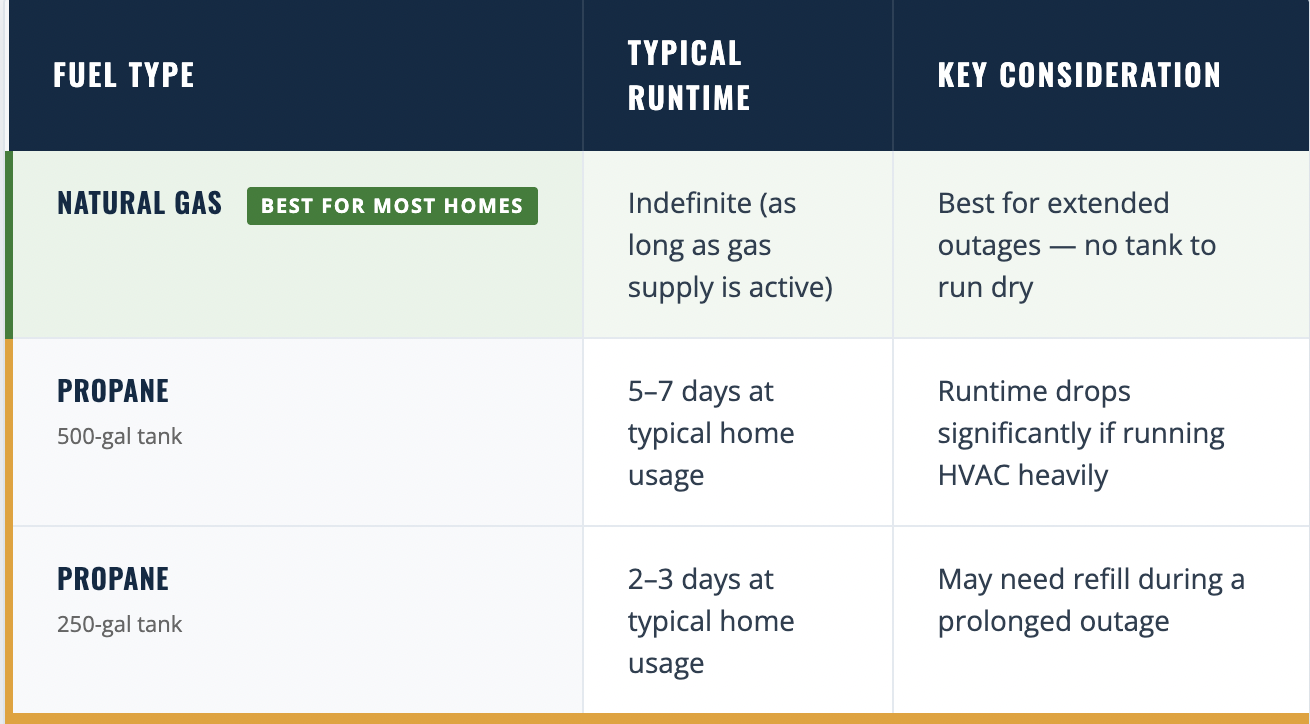
If your Generac fuel line is disrupted, and your power goes out, you can have a generator running for several days. Depending on the fuel in the generator, you can have upwards of a week’s worth of energy for your home. Of course, the duration can vary due to many factors and should be consulted on a case-by-case basis.
Frequently Asked Questions
How does a Generac generator know when the power goes out?
Generac generators include an automatic transfer switch (ATS) that continuously monitors the voltage coming from your utility line. The moment it detects a drop or loss of power (typically within 10–20 seconds), it signals the generator to start and switches your home's electrical supply from the grid to the generator automatically.
What size Generac generator do I need for my house?
The right size depends on your home's square footage, the appliances you want to power, and whether you have electric or gas heating and cooling. Most whole-home standby generators for residential use range from 11kW to 22kW. A licensed Generac dealer like C.M. Mose & Son can perform a load calculation to recommend the right size for your specific home.
How often does a Generac generator need maintenance?
Generac recommends an annual service for most residential standby generators, or after every 200 hours of operation — whichever comes first. Maintenance typically includes an oil and filter change, spark plug inspection, air filter check, and battery test. Generac generators also run a brief weekly self-test automatically to make sure the system is ready.
At C.M. Mose & Son we know how important it is to stay prepared and always have a backup plan in case the day does not go as planned. So when you call our technicians at (816) 339-5190, we’re here to help you with all your backup generator questions and make sure your Generac generator is ready to help you in those crucial moments the power goes out.