
Last Updated: February 2026
If you need to replace a blown fuse in a fuse box, this guide walks you through exactly how to do it safely. Fuse boxes are a big part of safely powering your home – a blown fuse reduces the risk of damage from electrical surges or overload and keeps unaffected circuits working. If it's been a while since you've dealt with a fuse issue, here's a step-by-step refresher, plus insight on when it might be time to upgrade to a safer, more modern option.
What Does a Fuse Do?
Electrical fuses automatically turn off the power when there is a problem. The fuse includes thin metal filaments that burn out or blow to reduce the risk of fire or additional circuits being affected. There are three main reasons a fuse might blow.
- Electrical overload – Older fuse boxes can’t handle as much amperage as circuit breaker panels. When a circuit carries too much power, it overheats and blows. This usually happens when households are running too many appliances, have added additional lighting, or are charging too many devices.
- Faulty appliances – Household appliances with bad wiring, loose connections, or that are malfunctioning can cause electrical imbalances that impact electrical needs. If the same fuse continues to blow, locate which appliances may be on that circuit.
- Short circuit – When one circuit contacts another, it’s called a short circuit. This is a serious fire hazard and can pose a risk to anyone who may come in contact with the affected wiring or appliances that may be connected.
You can always count on emergency residential electrical service when the power is out.
Before You Get Started
Before replacing a blown fuse, gather the following:
- A flashlight or headlamp (the main power will be off)
- Replacement fuses that match the exact amperage of the blown fuse (common sizes: 15A, 20A, 30A)
- Rubber-soled shoes or rubber-insulated gloves for safety
- A dry surface to stand on – never work near water
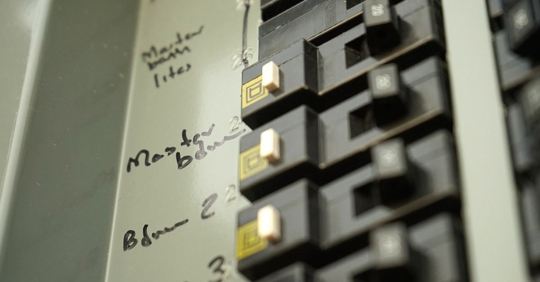
Not sure if you have a fuse box or a circuit breaker panel? Fuse boxes contain round, screw-in fuses you can see through a small glass window. Circuit breaker panels have rows of switch-style breakers. If you have breakers, you don't need to replace fuses – just reset the tripped breaker.
Replacing a Fuse in a Fuse Box, Step-by-Step
Follow these steps to safely fix a blown fuse and restore power to affected parts of your home. Always take care when working with any electrical components and give yourself plenty of time to follow these tips.
Step 1: Turn off all electrical devices in the affected area
Switch off lights, unplug appliances, and flip light switches to the off position – even if the lights aren't working. This prevents the replacement fuse from immediately blowing again due to the same load that caused the original failure.
Step 2: Cut power at the main fuse box switch
Locate the main power switch inside the fuse box and flip it off. This cuts power to the entire panel. Your home will go dark, so have your flashlight ready before you do this.
Step 3: Identify the blown fuse
Look for a fuse with a discolored or cloudy glass window, a visible break in the metal strip inside, or scorch marks around the fuse socket. If your panel is labeled, start with the circuit that lost power. When in doubt, inspect each fuse one by one – a blown fuse is usually obvious once you look closely.
Step 4: Check the amperage before removing anything
Before you touch the blown fuse, read the amperage stamped on it (typically 15A, 20A, or 30A). You must replace it with the exact same size, amperage, and fuse type. Installing a higher-amperage fuse is a serious fire hazard – it allows more current to flow than the wiring was designed to handle.
Step 5: Unscrew the blown fuse
Turn the fuse counterclockwise until it comes free. Handle it by the outer casing, not the glass. Set it aside – do not throw it away until you've confirmed the replacement fuse works.
Step 6: Screw in the replacement fuse
Thread the new fuse clockwise into the socket until it's snug. Do not overtighten. Confirm it's the correct size and amperage before proceeding.
Step 7: Restore main power and test
Flip the main power switch back on. If power is restored to the affected area, you're done. If the new fuse blows immediately, stop – there's likely a deeper wiring issue or a faulty appliance on that circuit. At that point, call a licensed electrician.
If you have any concerns about touching your fuse box or any electrical componentry, leave it to a trained professional. Call us today for friendly assistance.
What to Do If the Fuse Keeps Blowing
If you replace a fuse and it blows again right away – or keeps blowing repeatedly – the problem isn't the fuse. Here are the most common causes:
- Overloaded Circuit: Too many devices are drawing power from the same circuit. Try redistributing appliances to different circuits, especially high-draw items like space heaters, microwaves, and window air conditioners.
- Faulty Appliance: A single appliance with bad wiring or a failing motor can cause repeated fuse failures. Unplug everything on that circuit and plug devices back in one at a time to identify the culprit.
- Short Circuit: If a hot wire is contacting a neutral wire somewhere in the circuit, the fuse will blow every time. This is a fire hazard and requires a licensed electrician – do not attempt to diagnose or repair it yourself.
- The Fuse Box Itself Is Worn Out: Older fuse boxes can develop corroded sockets or degraded wiring that causes problems regardless of the fuse. If your box is more than 40–50 years old and fuses are blowing frequently with no obvious cause, it may be time to replace the panel entirely.
Do Fuse Boxes Need to Be Replaced?
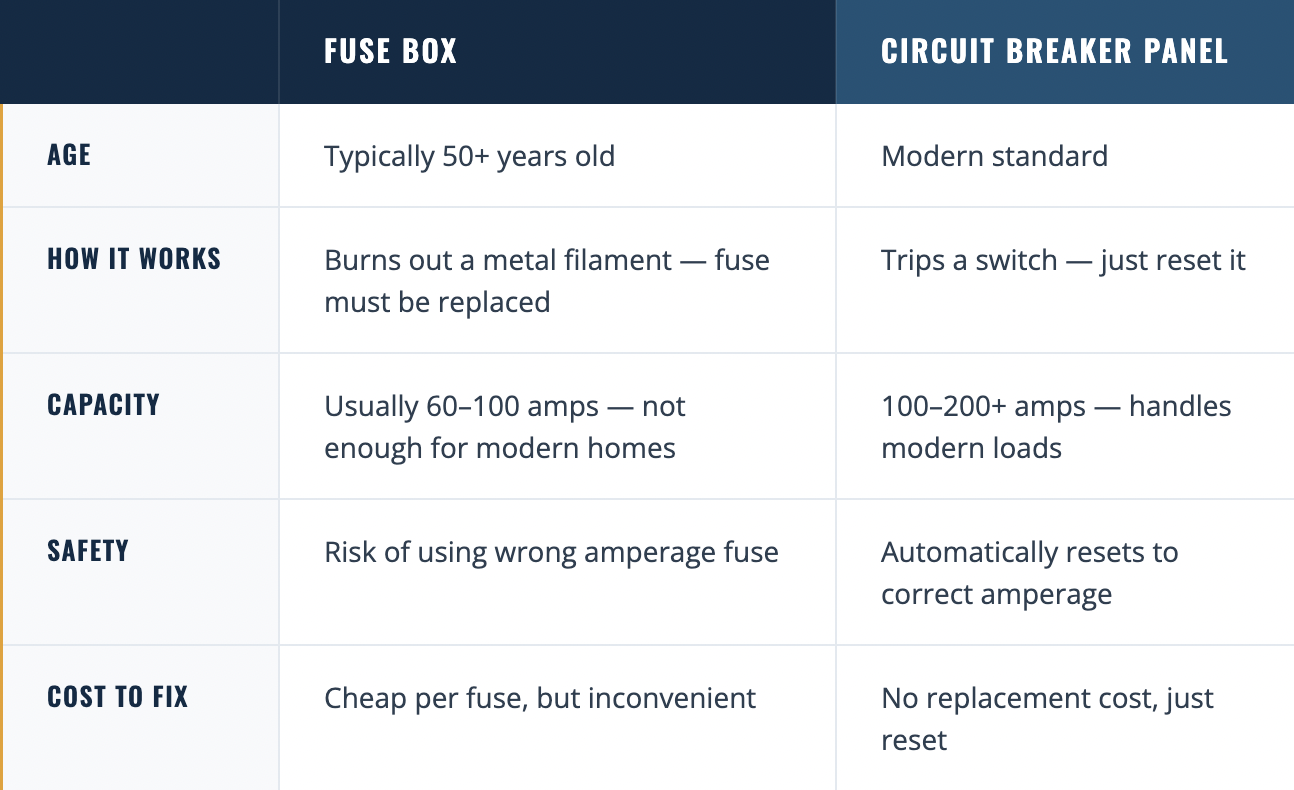
If your home has a fuse box, it’s almost certainly more than 50 years old. Over time, fuses and circuits wear out and increase the risk of fire or causing damage to wiring or appliances. To reduce these safety concerns, you can replace a fuse box with a circuit breaker panel.
Why the Cost to Replace a Fuse Box with a Breaker Panel is Worth It
Upgrading from a fuse box to a circuit breaker panel costs between $1,400 and $4,000. The cost varies based on your amperage needs and the extent to which your home’s wiring needs to be replaced. There are two main benefits to making the switch:
- Improved safety – Modern circuit breakers trip faster than fuses, which reduces the risk of fire or personal injury.
- Increased load – Circuits also carry higher amperages than fuses to accommodate modern electrical needs, including more appliances and charging electrical devices.
Frequently Asked Questions
What is the difference between a fuse box and a breaker panel?
A fuse box uses small metal fuses that physically burn out when a circuit is overloaded – you have to replace them. A circuit breaker panel uses resettable switches that trip when there's too much current. Breaker panels are safer, handle more amperage, and are the current standard in residential electrical systems.
What amperage fuse should I use?
Always replace a blown fuse with the same amperage listed on the original fuse, typically 15A, 20A, or 30A in residential fuse boxes. Using a fuse with a higher amperage than the circuit is designed for can allow too much electricity to flow through the wiring and create a fire hazard.
Is a fuse box safe in modern homes?
Fuse boxes can still function safely if they are properly maintained and used with the correct fuses. However, most homes built today use circuit breaker panels because they are easier to reset, handle higher electrical loads, and provide improved safety features. Many homeowners upgrade older fuse boxes to breaker panels to support modern appliances and electrical demands.
Power Your Home Safely with a Modern Circuit Breaker Panel
When you’re tired of replacing fuses, call C.M. Mose & Son. For over 60 years, we’ve helped families in the Kansas City area stay comfortable with professional electrical, HVAC, and power generation needs. Contact us online or call us at (816) 339-5190 to learn more about circuit panel installation services.